
Restarting Your Interlock Program After a Compliance Lapse
Disclaimer
The information in this blog is for general informational purposes only. Information may be dated and may not reflect the most current developments. The materials contained herein are not intended to and should not be relied upon or construed as a legal opinion or legal advice or to address all circumstances that might arise. You should contact your attorney to obtain advice with respect to any particular legal matter. Only your individual attorney can provide assurances that the information contained herein – and your interpretation of it – is applicable or appropriate to your particular situation. Links to any third-party websites herein are provided for your reference and convenience only; RoadGuard Interlock does not recommend or endorse such third party sites or their accuracy or reliability. RoadGuard Interlock expressly disclaims all liability regarding all content, materials, and information, and with respect to actions taken or not taken in reliance on such. The content is provided “as is;” no representations are made that the content is error-free.
An interlock restart after a lapse can feel like getting sent back to square one, and in some cases it literally is. Maybe you missed a calibration appointment, fell behind on a payment, or received a DMV suspension notice you weren't expecting. Whatever triggered the gap, you're now facing a tangle of vendor requirements, state rules, and deadlines that all seem to point in different directions.

This article walks through what happens after a compliance lapse: who to contact first, what it typically costs, and how to avoid landing in the same spot again. Every state handles these situations a little differently, so treat this as a general roadmap and confirm your specifics with your provider and DMV.
What Is a Lapse, and How Does It Differ From a Lockout?
People often confuse these terms, and the distinction matters because each triggers a different resolution path. A temporary lockout happens when the device itself prevents your vehicle from starting, usually after a failed breath test or a missed rolling retest. Your provider can typically resolve this at your next service visit or through a reset.
A compliance lapse is broader. It means you've fallen out of good standing with your program for reasons like a missed calibration, an extended service gap, non-payment that deactivated the device, or a pattern of flagged violations. When a lapse is serious enough, your state's DMV or licensing agency gets involved, and that's where things escalate.
A DMV suspension is the most severe consequence, occurring when your licensing agency determines you've violated the terms of your restricted driving privilege. At that point, your vendor can't simply reset the device; you need formal reinstatement from the state before you can legally drive again, even with the interlock installed. Figuring out where you fall on this spectrum is the first thing to do, because it determines whether your next call is to your provider, the DMV, or both.
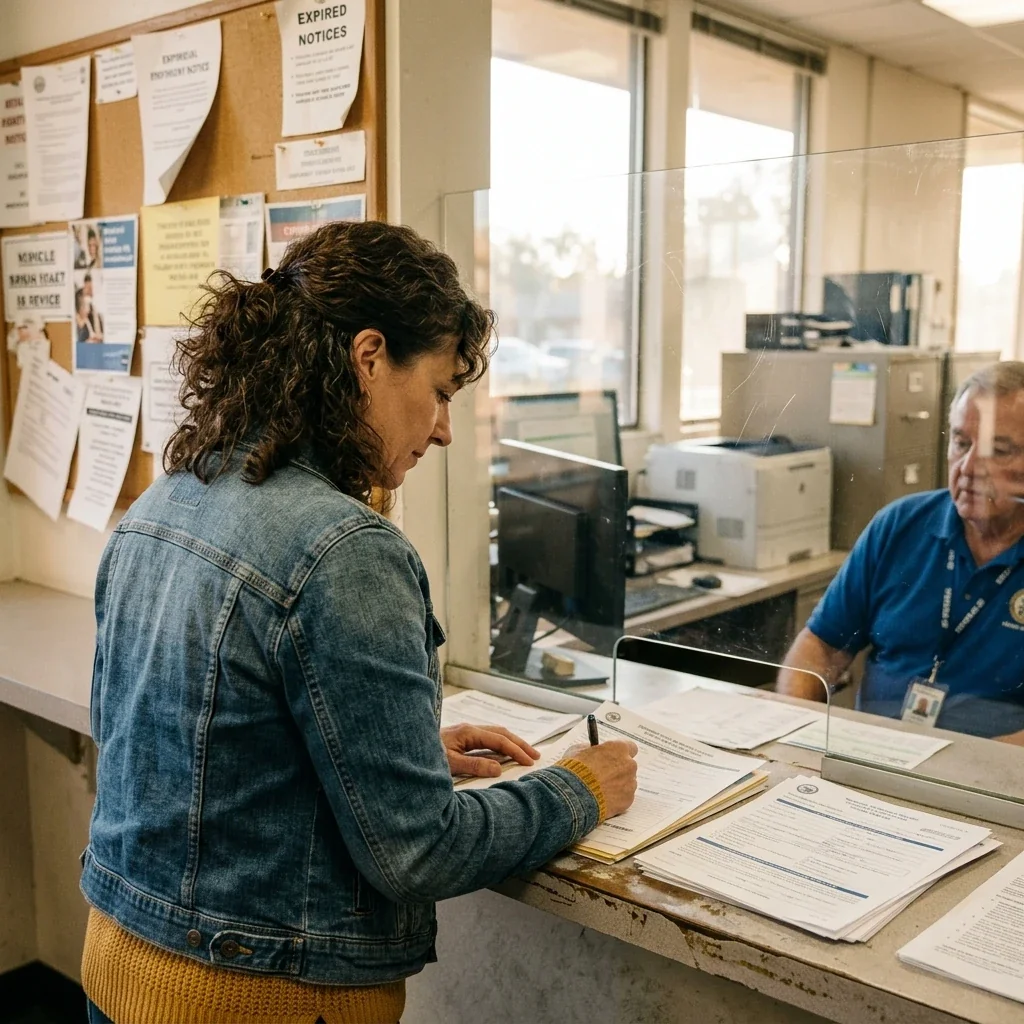
Your Step-by-Step Recovery Path
The process varies by state, but nearly every driver follows the same general sequence. Moving through it in order prevents backtracking and wasted appointments.
Step 1: Identify the cause and contact your provider. Call your interlock company before doing anything else. They can pull your compliance data, tell you what triggered the lapse, and clarify whether it stays at the vendor level or has already been reported to the DMV. If you're unsure what to expect after a violation, this first conversation sets the foundation.
Step 2: Check your license status with the DMV. Don't assume your license is still valid. Many states automatically suspend restricted privileges once they receive a non-compliance report. Log into your state's DMV portal or call their interlock program office to confirm your current status.
Step 3: Gather documentation and pay outstanding fees. You'll typically need proof of installation, any outstanding calibration records, and payment receipts. If a missed calibration caused the lapse, expect to schedule that first. Some states also require a reinstatement fee paid directly to the DMV, separate from what you owe your provider.
Step 4: Complete your service appointment and device reset. Your provider will inspect, recalibrate, and reset the device, so bring every document you've gathered. This visit also generates an updated compliance report for your monitoring agency. RoadGuard Interlock, for example, transmits compliance data and schedules regular calibration visits, which helps prevent gaps from forming in the first place.
Step 5: Confirm reinstatement and keep proof. Once the DMV clears you, get written confirmation (a printout, an email, or a date-stamped letter) and keep it in your vehicle alongside your current installation paperwork. If you're ever pulled over, proof of reinstatement avoids unnecessary complications.
How a Lapse Affects Your Timeline
Here's the part that catches people off guard: a lapse can extend how long you're required to keep the device installed. Many states now use compliance-based removal, meaning the device doesn't come off after a set calendar period. Instead, you need a violation-free window before you're eligible for removal, and research highlighted by the Governors Highway Safety Association has found these laws help reduce repeat offenses.
A lapse can reset that clock. If your state requires a stretch of consecutive violation-free days, a lapse may send you back to the beginning of that countdown, a concept sometimes called "tolling." Best-practice guidance generally recommends pausing "time served" whenever the device isn't installed and requiring a fresh violation-free period after a restart, though the exact rules depend on your state. It's the single biggest reason to take compliance seriously from the start.
Fees and Financial Impact
Restart costs can come from multiple directions. Your provider may charge a reset or reactivation fee alongside any overdue calibration costs, the DMV typically charges its own reinstatement fee that varies by state, and a tow during the suspension is an additional expense entirely. Some providers also charge for the compliance report sent to the DMV. Ask for a complete breakdown before your service appointment so nothing catches you off guard, and if cost is a barrier, ask about hardship programs or payment plans, since falling further behind on payments only compounds the problem.
How to Prevent Future Lapses
The best restart is the one you never have to do. A few habits go a long way:
- Set reminders for every calibration appointment at least a week ahead, and if something comes up, reschedule immediately rather than letting it slide. Understanding how rolling retests work also reduces the risk of unintentional violations.
- Keep your battery healthy. A dead battery can prevent the device from recording data properly, and gaps look the same as non-compliance to monitoring agencies.
- Address device issues early. If something seems off between appointments, don't wait; handling interlock malfunctions early keeps small problems from becoming compliance events.
- Save every receipt and correspondence. If there's ever a dispute about a missed appointment or payment, documentation is your best defense.
Staying on top of your calibration schedule is the throughline for all of this.
Frequently Asked Questions
How long does a restart usually take?
It depends on how quickly your state processes reinstatement and how soon you can get a service appointment. With no active suspension, many drivers resolve the device side within a few days, but DMV clearance can add wait time.
Can I drive to the service center if my restricted license is suspended?
If your privilege is suspended, you typically can't legally drive, even for an appointment. Ask your DMV or attorney about any permitted travel exceptions, and plan for a tow or a ride to avoid creating a new violation.
What if my lapse was caused by a medical issue, travel, or an emergency?
Some states allow you to request a review or submit mitigating documentation, but policies vary and exceptions aren't guaranteed. Collect supporting records and ask the DMV what form or process applies to hardship or compliance appeals.
Will a lapse affect my insurance or SR-22 filing?
It can, especially if the lapse causes a new suspension or additional violations on your record. Contact your insurer about premium changes, and verify with the DMV whether any SR-22 term is affected.
Should I switch providers during a restart?
Switching is sometimes possible but may require new paperwork, additional installation steps, and coordination so your monitoring agency keeps receiving uninterrupted reporting. Before changing, confirm with the DMV how transfers are handled and whether a change could delay reinstatement.
What documents should I keep after reinstatement, and for how long?
Keep reinstatement confirmation, service receipts, calibration records, and DMV correspondence in both digital and printed form. Hold them until your requirement is fully satisfied and your license is restored without restrictions, plus a buffer in case of audits or disputes.
How do I avoid a lapse if I move or travel out of state?
Update your address with the DMV and your provider immediately so notices and reminders don't get missed. If you'll be away during a service window, schedule early, find an approved service location near your travel area, and confirm your state allows out-of-state servicing and reporting.
Get Back on the Road With a Clear Plan
A compliance lapse doesn't mean your program is derailed permanently. It means you have a specific set of actions to complete in a specific order: contact your provider, verify your license status, settle outstanding obligations, complete your service visit, and get written proof of reinstatement. The longer you wait, the more complicated and expensive the restart becomes.
If you need an interlock restart after a lapse, RoadGuard Interlock's team can pull your compliance data, walk you through your state's requirements, and get your device recalibrated quickly, with service centers and support in the many states it serves. Schedule your service appointment and take the first step toward putting this behind you.
Disclaimer: This article is provided by RoadGuard Interlock for general informational purposes only and is not legal, financial, or medical advice. DUI and ignition interlock laws, penalties, fees, and program requirements differ from state to state and county to county, and they can change at any time. Any costs, timelines, or figures mentioned are general estimates rather than quotes or guarantees. Please do not rely on this article as a statement of the law where you live. Confirm current requirements with your state DMV, the court handling your case, a licensed attorney, or RoadGuard Interlock directly before making decisions. Device features, pricing, availability, same-day installation, and any promotions referenced are subject to change, vary by location, and may not be offered in every state RoadGuard Interlock serves.