
What Is SATOP? How Missouri’s DWI Program Fits With Your Ignition Interlock
Disclaimer
The information in this blog is for general informational purposes only. Information may be dated and may not reflect the most current developments. The materials contained herein are not intended to and should not be relied upon or construed as a legal opinion or legal advice or to address all circumstances that might arise. You should contact your attorney to obtain advice with respect to any particular legal matter. Only your individual attorney can provide assurances that the information contained herein – and your interpretation of it – is applicable or appropriate to your particular situation. Links to any third-party websites herein are provided for your reference and convenience only; RoadGuard Interlock does not recommend or endorse such third party sites or their accuracy or reliability. RoadGuard Interlock expressly disclaims all liability regarding all content, materials, and information, and with respect to actions taken or not taken in reliance on such. The content is provided “as is;” no representations are made that the content is error-free.

SATOP is Missouri’s Substance Awareness Traffic Offender Program. If your license was suspended or revoked after a DWI, or a court ordered you into the program, you complete a screening and then the education or treatment program it assigns. Finishing SATOP is one of the steps before Missouri reinstates your driving privileges.
For many drivers, the name first appears on a notice or a court document with little explanation attached. Three parties keep track of your progress from there: a state-certified SATOP agency, the Missouri Department of Revenue and, if your case calls for one, the company that installs your ignition interlock. The Department of Revenue needs to hear from the other two before your record is complete.
Who Has to Complete SATOP?
Missouri requires SATOP after an administrative suspension or revocation of a driver license for a DWI or DUI, and it can also come from a court order, a condition of probation or a plea bargain. The SATOP requirements also cover people charged with minor in possession and zero tolerance offenses.
The requirement can stay in place even when the criminal case doesn’t end in a conviction. A DWI in Missouri moves on two tracks. The court handles the ticket, while the Department of Revenue can suspend or revoke your license through a separate administrative process even if the ticket is reduced or dismissed. That’s why a dismissed case and a SATOP requirement can appear on the same record.
Two other routes run through the SATOP Comparable Program Completion Form. If you live in another state but the offense happened in Missouri, you complete a comparable program where you live instead of traveling back. If you’re a Missouri resident who finished a state-certified or nationally accredited substance use treatment program after the offense, that program may satisfy SATOP when it meets the state’s minimums, and the treatment agency fills out its part of the form.
How the SATOP Screening Works
Every SATOP case starts with an assessment screening, and its result determines which program level you attend. The screening takes place at an Offender Management Unit (OMU), one of the state-certified agencies that run SATOP assessments.

The screening is a drug and alcohol assessment, similar to a DUI evaluation, and it ends with a SATOP Program Assignment Form that names your level. Read the form before you leave the appointment, because it includes the deadline to start your program.
If You Disagree With Your Assignment
Missouri gives you two ways to challenge the level you’re assigned:
- A second opinion. You can complete another assessment at a different SATOP agency, as long as you haven’t started your program. It costs a second screening fee, and the second opinion is final.
- A judicial review. You can file for review in the associate circuit court of the county where the screening took place, and a judge rules on whether your placement changes.
Talk with your attorney before you choose either one, since the outcome of each depends on your case.
What Are the Levels of SATOP in Missouri?
Missouri sorts SATOP into service levels that range from a short education course to outpatient or traditional treatment. Lower-risk participants usually go to an education level, and repeat or high-risk participants to the counseling and treatment levels.

The levels, as the state names them:
- Offender Education Program (OEP), Level I: an education course for lower-risk participants about the choices that led to the arrest.
- Adolescent Diversion Education Program (ADEP), Level I: the education course for minors with Abuse and Lose, minor in possession or zero tolerance offenses.
- Weekend Intervention Program (WIP), Level II: intensive education and counseling over a weekend of structured activities, for repeat or high-risk participants.
- Clinical Intervention Program (CIP), Level III: outpatient treatment for persistent DWI offenders, or for people the screening identifies as high risk for chemical dependency, combining individual counseling, group counseling and group education.
- Serious and Repeat Offender Program (SROP), Level IV: a longer outpatient treatment program with individual and group counseling.
- Traditional treatment, Level IV: residential or outpatient substance use treatment at a state-certified or nationally accredited provider, for people with multiple offenses or a high risk of reoffending.
Levels I and II are education and counseling, the kind of mandatory alcohol education a DWI case often brings, while Levels III and IV are treatment. The agency running your level sets its own class schedule.
Finishing SATOP and What Happens Next
When you complete your assigned program, the agency sends a completion form to the Department of Revenue electronically. That form is how the Department of Revenue records that you’ve met the SATOP requirement.

SATOP is one requirement among several. The Department of Revenue has additional reinstatement requirements of its own, and which ones apply depends on your case. Contact the Department of Revenue to confirm what your record still shows as open before you assume your license is ready.
Questions about what SATOP still requires of you, or whether your completion has been recorded, go to the SATOP Help Desk at the Department of Mental Health. Keep a copy of every receipt and completion document the agency gives you. Missouri puts that responsibility on the driver. If the agency later closes, the Division of Behavioral Health can search its records, but your own copies are the proof you hold.
Where the Ignition Interlock Fits With SATOP
For anyone with more than one intoxication-related traffic offense on their record, Missouri requires an ignition interlock before reinstatement, or before a limited or restricted driving privilege is issued, and the device stays installed for as long as that privilege lasts. A court can also require an interlock after a first offense.
The rule applies to Missouri offenses even when the driver lives somewhere else. Someone with two or more intoxication-related offenses in Missouri has to meet the same requirements as a Missouri resident, using a device approved for use in Missouri that reports to the Department of Revenue or the court’s supervising authority.
What the Device Does Once It’s Installed
An ignition interlock is a breath-testing device wired to the vehicle’s starter. The engine won’t start if your breath test registers at or above the device’s alcohol set point, and the device asks for repeat tests while you drive. It’s connected to the starter system, so it can’t shut off a vehicle that’s already running. Other people can drive the car too, as long as they haven’t been drinking, but each device is assigned to one person for reporting.
Work driving needs its own plan. Missouri doesn’t require an employer to put an interlock in a company vehicle, and you can’t drive a company vehicle without one while the requirement applies. If your job involves driving, work out the arrangement with your employer before your reinstatement date.
When the Interlock Counting Period Starts
The Department of Revenue begins counting your interlock period on the day it receives the manufacturer’s notice, provided all your other reinstatement requirements, SATOP and insurance among them, are met. The count needs both pieces. An installed device with SATOP still open leaves it waiting, and so does a finished SATOP program with no manufacturer’s notice on file.
How long you keep the device is set by your case, so ask the Department of Revenue, and your court if it ordered the interlock, rather than relying on anyone else’s timeline. Before any interlock removal, confirm your eligibility with those same authorities.
Scheduling Your Installation
Schedule the installation on the timeline your Department of Revenue notice or court order sets. The installing company reports your compliance to the Department of Revenue, the court’s supervising authority or both. Missouri keeps a list of approved devices and manufacturers, and RoadGuard Interlock is on it.
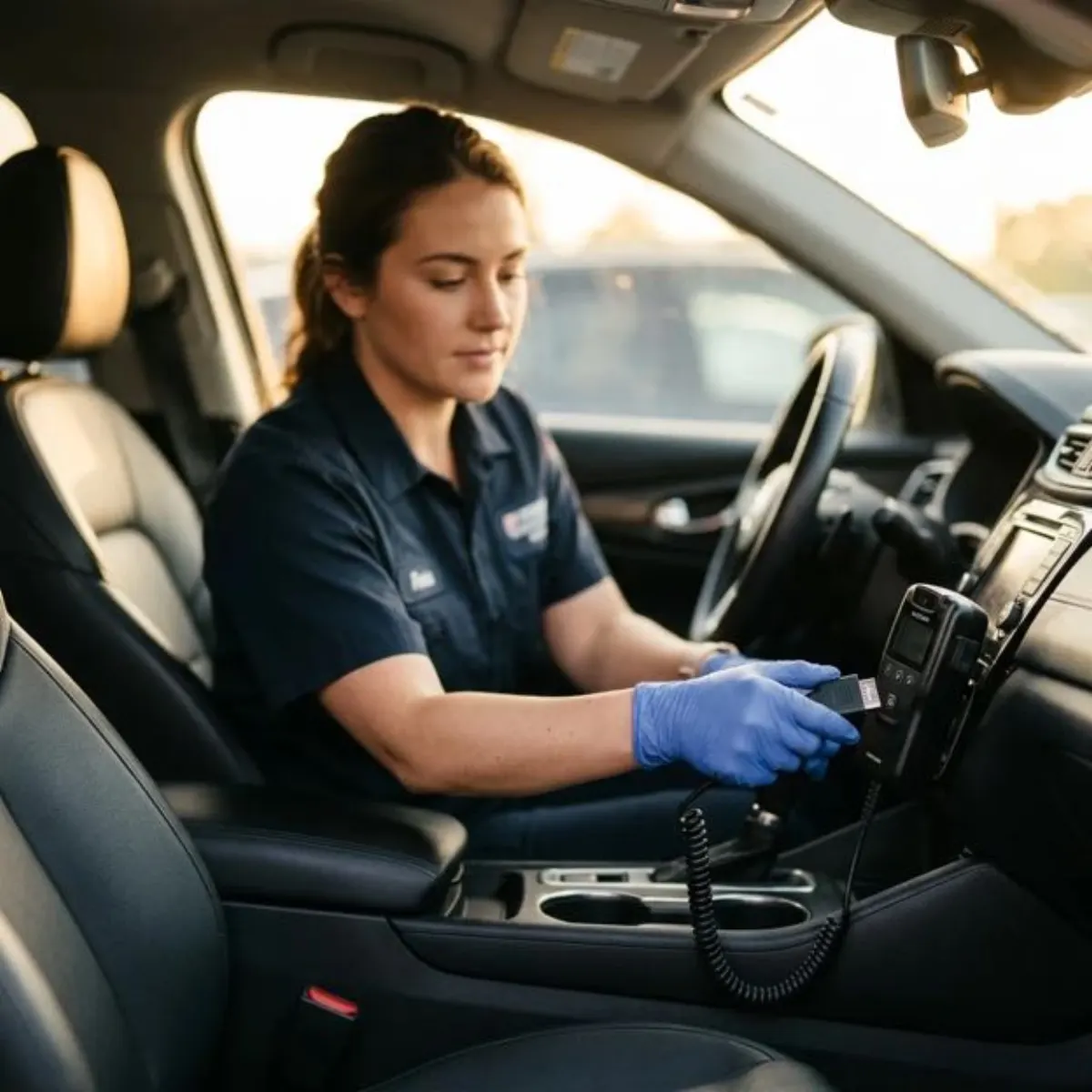
A few steps keep the interlock side of your record in order:
- Read up on interlock installation before the appointment so you know what to bring.
- Keep every scheduled service appointment, and put the dates somewhere you’ll see them.
- Call RoadGuard Interlock support at 1-833-545-0368 with any device question, warning or appointment conflict before you try anything yourself.
What SATOP Costs and How Long It Takes
Missouri sets SATOP fees by service level, and the time you spend in the program depends on the level your screening assigns and your agency’s schedule. Current amounts and the hours for each level are on Missouri’s page of SATOP fees and service levels, and fees are subject to change.
Expect three kinds of charges: the screening, a supplemental fee that state law requires, and the program for your level. Financial assistance may be available for people enrolled in the Weekend Intervention Program, the Clinical Intervention Program, the Serious and Repeat Offender Program or other state-contracted treatment. Ask the agency about it at your screening. SATOP charges and interlock charges are separate bills: the SATOP agency and the state collect the program fees, while the installing company bills for the device, so plan for both.
Beyond the program hours, the wait for a screening appointment, the agency’s class calendar and the Department of Revenue’s other requirements all affect when you finish. Start the screening soon after you learn you need SATOP.
Frequently Asked Questions
What is satop?
SATOP stands for Substance Awareness Traffic Offender Program, Missouri’s state-certified DWI program. Its stated goals are to reduce repeat DWI offenses among people who complete it and to give participants a chance to address their alcohol and substance use. The program pairs an assessment screening with an assigned education or treatment level, and the agencies that deliver it are certified and monitored by the Department of Mental Health.
Can I do satop online in Missouri?
DWI and DUI classes offered over the internet don’t meet Missouri’s SATOP requirement, so an online course from an uncertified website won’t count. You need a state-certified SATOP agency for the screening and for your assigned program. Ask the certified agency you choose how it delivers the screening and your level before you pay anything.
Do you have to pay for satop in Missouri?
Yes. SATOP is paid for by the participant, and the charges come in stages: the screening, the supplemental fee and then the program itself. The supplemental fee is required by state law, and only one is due per offense. It goes into a state fund that helps pay for SATOP for participants who qualify through a means test, and that fund pays for the financial assistance offered at certain levels.
How much does the SATOP assessment cost in Missouri?
Missouri lists a single screening fee for its contracted SATOP agencies, and the current amount is on the state’s SATOP page. Plan for it separately from the program fee for your level. If you ask for a second opinion at a different agency, you pay the screening fee again, but you don’t pay a second supplemental fee for the same offense.
How long does satop take to complete in Missouri?
It depends on your level. Education levels are short courses, the Weekend Intervention Program runs over one weekend, and the treatment levels take longer. At Level IV, the program’s clinical staff decide when you’ve finished. Your Program Assignment Form also sets a start deadline, and your agency can give you class dates once you enroll.
How do I get an SATOP assessment in Missouri?
Choose a state-certified SATOP agency from Missouri’s provider directory, which lists agencies by county, and book a screening. You pay the screening fee and the supplemental fee at that appointment. Along with your Program Assignment Form, the screening agency gives you a list of agencies that run your assigned level.
What are the requirements for having an ignition interlock device in Missouri?
Missouri requires an interlock before reinstatement, or before a limited or restricted driving privilege, for drivers with more than one intoxication-related traffic offense, and a court may require one after a first offense. The device has to be a Missouri-approved model, and it must be on every vehicle you drive, including one you don’t own. Your court and the Department of Revenue can confirm how the rules apply to you.
How much is an ignition interlock in Missouri?
Missouri doesn’t keep a price list for interlocks, and costs vary from one approved company to another. Provider charges typically include installation, a monthly lease and removal, and the installation price can vary by vehicle type. The interlock device cost breakdown explains how those charges work, and a quote for your vehicle and location gives you the price for your situation.
Getting Your Interlock Scheduled in Missouri
Once you know your SATOP level and whether your case requires an interlock, book the installation so the manufacturer’s notice can reach the Department of Revenue. RoadGuard Interlock’s device has a sleek, discreet design and a simple blow-suck breath test. To see service locations near you and request a quote, find a Missouri location.
Disclaimer: This article is provided by RoadGuard Interlock for general informational purposes only and is not legal, financial, or medical advice. DUI and ignition interlock laws, penalties, fees, and program requirements differ from state to state and county to county, and they can change at any time. Any costs, timelines, or figures mentioned are general estimates rather than quotes or guarantees. Please do not rely on this article as a statement of the law where you live. Confirm current requirements with your state DMV, the court handling your case, a licensed attorney, or RoadGuard Interlock directly before making decisions. Device features, pricing, availability, same-day installation, and any promotions referenced are subject to change, vary by location, and may not be offered in every state RoadGuard Interlock serves.